
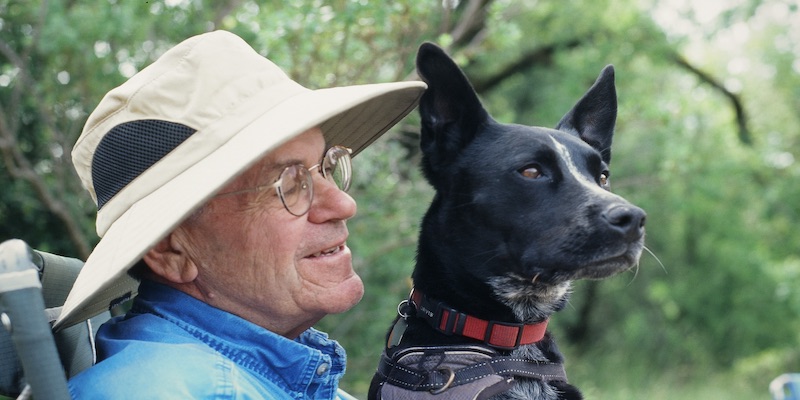
Scott Eberle, wilderness guide
School of Lost Borders & EarthWays LLC
In a global world where so many feel powerless, our stories are all we have. Our stories must be told.
– Sue Sully
To begin, a snippet of a story . . .
A courageous person walks alone into an expansive desert, leaving behind the familiar rhythms and roles of ordinary life. Above is an endless sky. In the distance, an expansive horizon. Into this wide-open space, she brings all her hopes and fears, all her wounds and blessings – the raw material of a human life. After four days fasting under a bright hot sun, after four nights gazing at a canopy of shimmering stars, she finally leaves the Realm of the Spirit and returns to basecamp. There she is met by nine other fasters and a guide team of four: a community of welcoming faces, listening ears, cracked-open hearts. Together they delight in a fast-breaking meal, which begins their slow return to an embodied life. The next day the group gathers for a storytelling council where each person, in turn, speaks about what happened during their solo time, including any visions and insights received that will help guide the way back home. The tale our desert hero tells the others might be the most expansive, the most authentic story she has ever dared to speak.
I’ve worked as a rite-of-passage guide for a quarter of a century. I’ve sat in hundreds of these story councils and had the privilege of hearing so many stories just like this one. I know firsthand how transformative this desert ceremony can be. What happens out there is magical.
It’s magical, and it’s also subversive.
When a circle of storytellers weaves together authentic tales – stories full vision and insight, meaning and purpose – they are boldly challenging the dominant social narratives of our current time. This sort of storytelling is an act of cultural rebellion.
Throughout the last century, the volume and speed of information in the modern world grew steadily until it exploded into the supernova we call the internet. In response to the inevitable information overload, our styles of communication have become ever more fleeting, fragmentary, and commodified, be it an endless sending of texts or a mind-consuming addiction to social platforms like Instagram or FaceBook. Two studies from the previous decade revealed that the average American, on a typical day, was on their cellphone for 3-1/4 hours and touched the screen of that phone 2,617 times (see Stolen Focus by Johann Hari.).
Imagine what those numbers are today.
Philosopher and social critic Byung-Chul Han recently released his latest book ominously called The Crisis of Storytelling. In this age of communication overload, Han suggests, we now exchange packets of information more often than telling real stories. He calls this storyselling rather than storytelling. We sell our products, our politics, our religion. We even “sell” our personal identities. “In digital late modernity,” Han writes, “we conceal the nakedness—the absence of meaning in our lives—by constantly posting, liking, and sharing. The noise of the communication and information is supposed to ensure that life’s terrifying vacuity remains hidden.”
In a world such as this, telling an authentic story can be an act of rebellion: a reclaiming of our capacity to make meaning out of this confusing modern world. But real storytelling demands that we slow down and make time, that we listen deeply and speak deeply, that we foster real intimacy with ourselves and with others. One way to do this, one of many, is to come together in a story council after each person in that circle has spent extended time alone in nature.
Here’s another story . . .
Last year, after over a decade of reading and writing, of deep reflection and integration, I finally finished my newest book,The Soul’s Red Thread: Memoirs of a Guide. Writing this was my own personal rebellion: storytelling as a subversive act. I spent years excavating the buried truths of my life – a life lived as a queer man in a culture that has often told me I don’t belong, that my love isn’t acceptable, that my very existence is somehow wrong. Every chapter in the book was an act of defiance, a small rebellion against all those people that would have me remain silent.
But last summer, as I prepared to release this book into the world, doubt started to creep in. In a world where well-developed stories have been replaced by packets of information, would anyone care about what I had written? Did these stories matter beyond my own need to tell them? This combination of self-exposure and self-doubt left me feeling seriously vulnerable – as if I had sloughed off layers of skin, uncovering the rawest of nerve endings.
During this challenging time, I asked my friend Sue Sully if she would write a blurb for the book’s back cover. Sue, a psychotherapist and rite-of-passage guide, had been more than a friend during this process. She had read most of the chapters, offering both her editorial eye and her deep understanding of the transformative power of storytelling. If anyone would know whether these stories mattered, it would be her. The words Sue wrote were like a balm to those tender nerves.
“Scott’s book arrives at just the right time. In a global world where so many feel powerless, our stories are all we have. Our stories must be told . . .”
As summer turned to fall, this hypersensitivity left me feeling ill-suited for all the ways the world was unraveling. The political climate was growing ever more toxic, with voices of hate drowning out calls for compassion. In this disturbing time, Sue’s words began to blaze with new meaning. She was not just talking about my book, I realized. She was talking about something so much greater. All our stories must be told. But in a world that values packets of information rather than well-developed narratives, how can each of us find a way to make that happen?
Returning briefly to the first story . . .
So, what will become of our desert hero after she returns home, after she is again confined within the rhythms and roles of daily life? We often say at The School and at EarthWays that of the three stages of a rite of passage—severance, threshold, incorporation—the hardest to navigate, by far, is the last: incorporation. A common story we hear concerns the participant who has a BIG experience in the desert, only then to have a horribly challenging time after returning home. Might this happen to our desert friend? In a world where so much communication is fleeting, fragmentary, and commodified, will she find people at home who can understand and mirror back the profundity of her desert story? Without communal support, turning desert visions and insights into something tangible and real can be seriously difficult.
Back to the story about my book . . .
The great turning point of The Soul’s Red Thread comes near the halfway mark in a chapter called “The Law of the Tapping.” In it, I tell the story of how I responded to a tapping inside: a summons to the desert to do my first-ever solo fast. I sojourned in Hanupah Canyon in Death Valley National Park – a place I’ve come to call The High Country of the Mind and Heart. The rest of the book can be read as one long journey of incorporation: me forever trying to bring a small measure of that cracked-open heart back into The Lowlands of Ordinary Life.
With the telling of my life story complete and with Sue’s words reverberating inside, an inevitable question arose: How might I, as a wilderness guide, support others as they walk down the long, winding road of incorporation? The question was not entirely new. Five years ago, I started a one-on-one rite-of-passage counseling practice, supporting people who were preparing to go to a desert fast or those who were returning home and looking to integrate their solo experience. This has been good work, deeply satisfying work. And yet a key element of the desert ceremony has been missing from my counseling practice: a person being heard and seen not just by me, one individual, but by a circle of like-minded souls. It was time, I decided, to offer a new kind of incorporation support: one that would call together a storytelling circle, month after month, while also drawing upon all that I had learned in the telling of my own life story.
Three Seasons of Storytelling
In spring of this year, a circle of nine people came together for the first of nine monthly meetings. At the height of summer, we had our fifth gathering. The last of the nine will come soon after autumn has ended. This program has notbeen a book club to discuss my memoir. Rather, over the course of three seasons, I’ve been encouraging each person to discover the great arc of their own life story. Every month we explore a theme drawn from my book. A life story begins before you’re born. The core wound and the core blessing. Navigating life’s middle passage. And soon to come: Turning wise speech into wise action. After encouraging the group to reflect upon, journal about, and discuss a given theme, I encourage them to go outside for a day walk, the short form of a vision fast ceremony. These day walks then culminate in the group gathering for multiple rounds of story council, each person doing their own deep dive into authentic storytelling.
In this time of great uncertainty, our stories must be told.
And in Three Seasons of Storytelling, each participant is doing just that.
During these last few months, I have often felt both great comfort and deep satisfaction, like nothing I’ve known in years. The comfort comes from the simple relief of having told my life story, fully and completely – at least for now. (It also helps that layers of my skin have grown back, allowing those raw nerve endings to heal.) The deep satisfaction comes from watching and listening as others tell their own life stories: each a poignant blend of hopes and fears, of blessings and wounds, of visions and insights. If storytelling like this is a subversive act, then offering Three Seasons of Storytelling to others has been my newest act of rebellion.
_____________________________________________________________________________________
Here are words from two participants:
Taking a journey with Scott through the seasons to gather and deepen the stories of my life has been an amazing and beautiful gift. Scott invites us to find the heart of our paths through life, to see where we’ve been and where we are going. He provides a thoughtful framework grounded in wisdom and community. a place for powerful truth telling. In this present moment in the world, sitting in a circle where deep truths are being spoken brings me a profound sense of peace and homecoming.
– Linda Mulvany, Berkeley, CA
This course is magic. Spread throughout the seasons, it has conjured a type of ongoing ceremony for me. Meeting once a month has been the perfect dosage to grow my story. Journeying with the same lovely people all year, I also have been inspired by their deepening stories.
– Matthew Sutton, Davenport, CA
_____________________________________________________________________________________
So now, here comes the storyselling part of what I write . . .
I have been so touched by this first go-round that next year, 2026, I am expanding Three Seasons into Four Seasons of Storytelling. And this time, I am calling in two different cohorts, with each separate group journeying together through a storytelling year.
_________________________________________________________________________________
The Eagle Cohort, enrolling through the School of Lost Borders
This cohort invites people from all over the world to meet once in the Bay Area for a weeklong session in September of 2026. All other meetings, going from June 2026 to April 2027, will be held on Zoom.
Note: A person joining this cohort should have the motivation and discipline
to do a monthly day walk on their own prior to each Zoom gathering.
For more information or to enroll: Four Seasons of Storytelling – School of Lost Borders
_________________________________________________________________________________
The Redwood Cohort, enrolling through EarthWays
This North Bay-based group will meet in person every month from January 2026 to December 2026.
For more information or to enroll: Four Seasons of Storytelling – EarthWays
_________________________________________________________________________________
One final note about both cohorts: For a younger participant, a few of the monthly themes may lie ahead of their current phase of life – for example, eldering and mortality. No problem. A younger person can reflect upon and speak about issues that will only grow in importance later in life, just as an older person can look back at life passages already completed. If you are wondering if Four Seasons is right for you, simply ask yourself: At present, have I had enough life experiences to drop into each of these themes?
Once the two circles come together, my great prayer is this: May all the storytellers slow down, make time, listen and speak deeply, and foster a real intimacy with themselves and with each other. And may everyone, supported in this way, become a cultural rebel of the best kind.
How about you? Are you feeling called to step in?
If so, what authentic stories might you have to tell?
Just like my dog Chloe, I’m all ears.
If you have questions about Four Seasons of Storytelling – or about my 1-on-1 counseling practice – please write to me at scott@lostborders.org
Scott Eberle
Leave A Comment